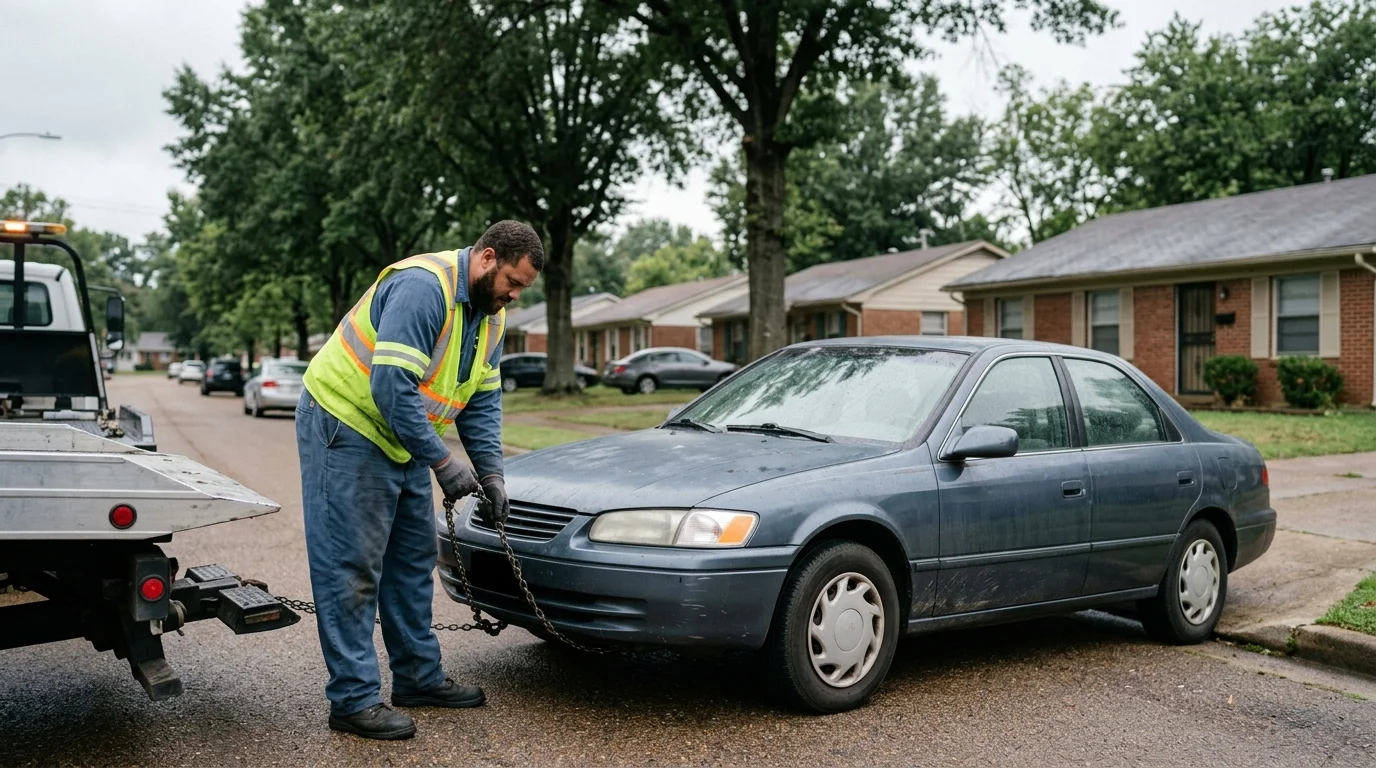
Getting a tow without paying at the roadside usually requires an existing benefit or limited public help. In Memphis, check your insurance or roadside club terms first. TDOT HELP can handle certain problems on listed highways, but it won’t tow your car to a shop, home, or storage lot.
Free almost always means somebody else is paying
A free tow generally isn’t a tow without a cost. It means an insurer, roadside club, vehicle program, or another party accepts the bill under its own terms. Your first task is identifying that payer before anyone moves the car.
The City of Memphis and TDOT materials reviewed for this page don’t confirm a general program that gives every driver free transport to a chosen destination. Quick Tow Memphis doesn’t offer free towing, free pickup, or a fee waiver. We match callers with local operators, and each operator contracts directly with the customer.
When you search for “free towing Memphis,” separate roadside help from vehicle transport. Someone changing a flat where the car sits is different from loading it onto a truck. Moving a vehicle across Memphis is also different from clearing one that blocks an interstate lane.
Start with the agreement you already have. That could be an insurance endorsement or roadside club contract. Read the terms or call the provider before arranging separate service, when circumstances allow. Ask who must dispatch the operator and how payment works.
If nobody else accepts the charge, you’ll need a private tow. That doesn’t mean you should agree without details. Ask for the full total, including mileage, before dispatch. Also ask what circumstances could change that amount.
Your own policy or club: what to check before you call
Tennessee doesn’t require insurance policies to cover towing. Roadside assistance and towing coverage are optional policy add-ons. The answer therefore depends on your own endorsement, not a statewide insurance rule.
Check the policy itself before counting on a free tow with insurance. A roadside club works the same way for this purpose: its written membership terms determine what it will arrange or pay.
Ask the insurer or club these questions:
- Is this vehicle covered under my current agreement?
- Must your company arrange the service?
- Do you pay the operator directly?
- If I pay first, can I request reimbursement?
- Which destinations and towing distances will you authorize?
- What receipt or authorization should I keep?
- What happens if the tow exceeds the approved benefit?
These are questions for your provider, not promises a towing operator can make. Get the answer in writing when possible. Save any authorization number, message, and receipt connected with the request.
Don’t assume a familiar logo means every service is included. Your vehicle, location, destination, or requested service may affect what the contract authorizes. Confirm the exact move before the operator starts loading.
If your provider won’t arrange the tow, you can still request roadside assistance in Memphis. Tell the referral line what happened, where the vehicle sits, and whether you already contacted your benefit provider. That helps distinguish a roadside task from a tow requiring the right truck.
TDOT HELP on the interstates
The TDOT HELP program provides free roadside patrols in Memphis. Patrol hours are Monday through Sunday, from 6:00 a.m. to 8:30 p.m.
Its listed Memphis routes are specific. They include I-40 and the Hernando de Soto Bridge. Coverage also includes I-55 from state line to state line, the full I-240 loop, and SR-385, also called Bill Morris Parkway.
HELP services include flat changes, fuel delivery, minor mechanical help, and clearing vehicles that block traffic. That list doesn’t include towing your vehicle to a repair shop, home, or storage lot. Anything beyond lane clearance requires a private tow.
HELP also isn’t a call-out towing service. You can’t treat the patrol like a club benefit that books transport to your selected destination. Its role is limited to the listed routes and services.
Location makes the difference. A breakdown on the I-240 loop may fall within HELP’s patrol area. A disabled vehicle on Lamar Avenue, which carries US-78 and SR-4, isn’t on the listed HELP route map. Surface streets and parking lots require a different plan.
You can check TDOT SmartWay for current traffic, cameras, and incident information. That can help you understand conditions around I-40, I-55, and I-240. It doesn’t replace arranging a private operator when the vehicle must leave the highway.
Junk and scrap removal, where the car itself is the payment
“Free junk car removal Memphis” describes a different transaction from emergency towing. A buyer or dismantler may present removal as free because its offer accounts for the vehicle being transferred. That doesn’t establish a universal no-cost service or guarantee any payment.
No current Memphis buyer, payout, or standing free-pickup offer could be confirmed from the approved local sources reviewed for this page. Check directly with the buyer or dismantler before surrendering the vehicle. Ask for the complete offer in writing.
The written terms should answer several basic questions. Ask whether money changes hands, whether any towing charge is deducted, and who receives the vehicle. Confirm what happens if its condition differs from the description. Also verify which ownership documents the buyer requires.
Don’t treat a junk-car offer as roadside assistance. You’re discussing a vehicle transfer, not a benefit that returns your daily driver to the road. A company willing to collect a scrap vehicle may not provide ordinary towing after a breakdown.
Title status also matters. Tennessee has different paperwork paths based on the vehicle’s age, condition, ownership records, and intended disposition. Our guide to junk-car paperwork in Tennessee explains those paths without turning this article into a title checklist.
Location matters here too. A pickup originating in Southaven or elsewhere in DeSoto County follows Mississippi law. A pickup from West Memphis or Marion follows Arkansas law. Tennessee rules shouldn’t be carried across either state line.
Where “free” claims go wrong
Problems start when “free” appears without a named payer or written terms. The word might refer to roadside labor, a limited policy benefit, junk-vehicle collection, or highway lane clearance. Those are different services.
Before accepting an offer, ask:
- Who pays the towing operator?
- Does the offer include transport or only roadside help?
- Must a particular provider arrange the service?
- Is payment direct, or do you request reimbursement later?
- Which destination is authorized?
- Is mileage included in the stated amount?
- What happens if the benefit is denied?
- What would make the final total change?
If no third party covers the move, our standard light-duty hookup starts at $95. That is a starting hookup fee, not the complete towing total. Distance, vehicle size, time of day, truck type, and hookup difficulty can change the amount.
Ask for the full total with mileage included before agreeing. Ask the operator to explain what could change it. Quick Tow Memphis puts the total in writing before dispatch and provides an itemized invoice. Written authorization and related paperwork are produced on request.
Our service is pay-per-call, with no membership or annual fee. That doesn’t make the tow free. It means you don’t need to buy an ongoing plan before requesting a match with a local operator.
Be especially careful when a promotion avoids naming the destination, mileage, or payer. A clear offer should identify exactly what is covered. If that can’t be confirmed, treat the service as potentially paid and request the total first.
When to call us
When a benefit won’t transport the car, or HELP can only clear a lane, the job belongs with a working tow operator. Our line takes calls 24/7, and we’ll match your details with a local operator who performs the work and contracts with you directly. Call us at (901) 557-8700.