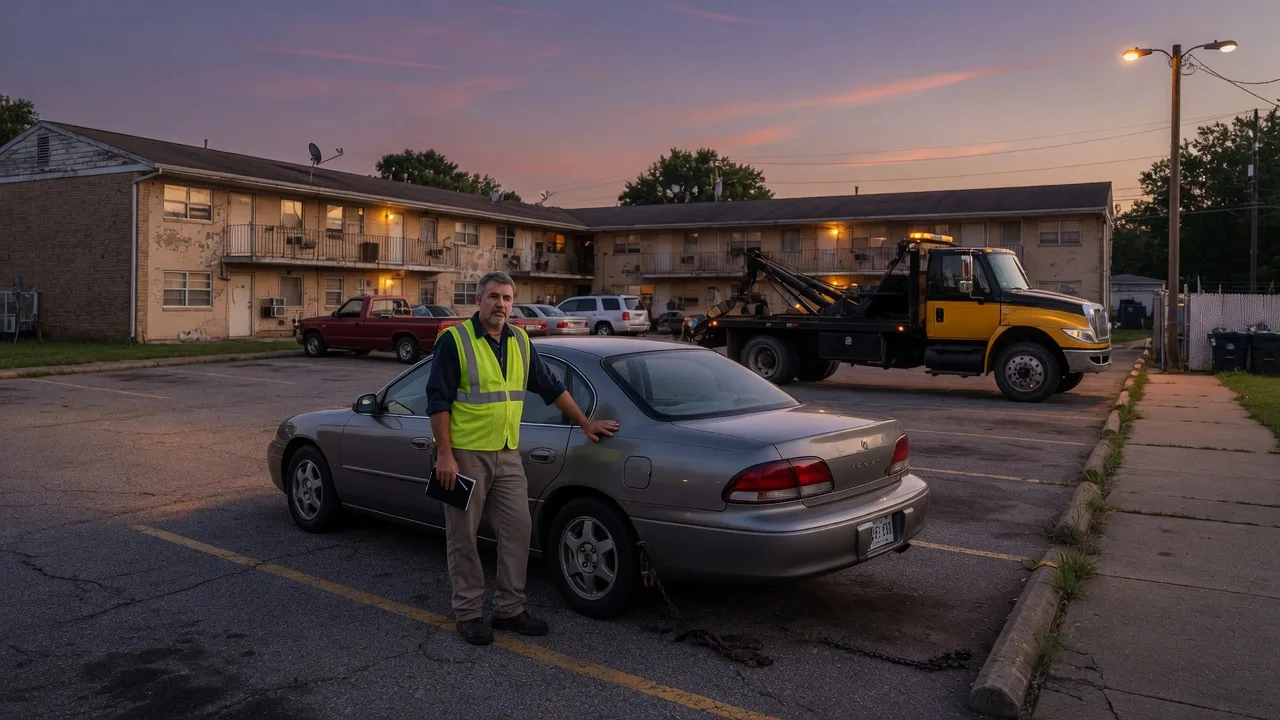
Yes, a tow truck can enter private property in Memphis when someone with authority requests the tow. That may be the vehicle owner, property owner, or an authorized property representative. Quick Tow Memphis connects callers with operators, but it doesn’t decide whether a removal is lawful.
Start with who can invite a truck onto the lot
The first question isn’t whether a tow truck can cross the property line. It’s who asked the operator to enter and remove the vehicle.
A vehicle owner can request help with a disabled car on private property. That often happens in an apartment lot, workplace garage, shopping center, or home driveway. The caller should also confirm that the property allows the operator to enter. Gates, controlled garages, and restricted loading areas may require access from management.
A different process applies when someone wants another person’s vehicle removed. Tennessee allows a private property owner or an authorized agent to approve removal from property that isn’t open to the public. Memphis also requires express written authorization for a private-property tow.
The person requesting removal should be able to explain their authority over the lot. A tenant, customer, employee, or neighbor shouldn’t assume that using the property gives them authority to order a tow.
Commercial lots open to the public have another layer. State rules address posted commercial and public-access lots separately. Signage may matter, but a sign alone doesn’t answer every authorization question. Our guide to Tennessee private-property towing signs explains those distinctions.
Property managers arranging ongoing enforcement can also review how private-property towing contracts in Memphis differ from a single removal request.
How a public street is different from a private lot
A curb can look like part of a business or apartment complex. It may still belong to the public street. That changes who can request the tow.
A property owner can authorize removal from property they control. They shouldn’t treat a public curb, street shoulder, or nearby lane as part of their private lot without confirming the boundary. If the vehicle sits on a public street, local law enforcement may handle the tow request instead.
This distinction matters across Memphis. A storefront lot along Lamar Avenue may be privately controlled, while the adjoining curb follows a separate process. The same issue appears around Midtown businesses, East Memphis office lots, and gated Cordova apartment communities. Paint, landscaping, and parking layout don’t always show where private control ends.
City-authorized removals also follow a different path from private-lot towing. MPD tows, Shelby County Sheriff tows, and Housing and Community Development tows process through the Memphis Police Department Vehicle Storage Lot. That city process shouldn’t be confused with a private operator entering a lot at the property owner’s request.
Jurisdiction changes again across the state lines. A tow originating in Southaven follows Mississippi law. A removal in West Memphis follows Arkansas law. Tennessee private-property rules shouldn’t be applied to either location.
When the boundary or controlling authority isn’t clear, confirm it with the property owner, city, or agency responsible for that location before requesting removal.
What written authorization usually means
For a private-property tow inside Memphis, written authorization needs more than a vague instruction to clear the lot. City rules require specific information tied to the person, vehicle, and reason for removal.
The paperwork identifies the person authorizing the tow. It also describes the vehicle by year, make, model, and color. The reason for the tow must be recorded. The plate belongs on the authorization when available, along with the VIN when it can be determined.
That detail helps connect the request to one vehicle and one event. A verbal complaint such as “someone keeps parking here” doesn’t contain the information required by Memphis rules.
State law also treats authorization from the vehicle owner differently from a non-consent removal. A tow requested by the vehicle owner is based on that owner’s express written approval. For a vehicle on private property without public access, the property owner or an authorized agent can approve removal.
Posted commercial lots open to the public follow additional state rules. Residential rental property has another rule. A landlord may remove an unauthorized vehicle after written notice has been posted on the vehicle for the required period. Immediate removal may apply when a vehicle violates the landlord’s posted permit-parking policy.
Those categories shouldn’t be blended. An apartment parking policy isn’t automatically the rule for a retail lot. A retail sign isn’t proof that a caller controls a residential space. For help arranging a documented private-property tow, give the operator the property type and the requester’s role at the start.
What to record before anyone hooks up
Good records start before the vehicle moves. Property owners and managers should identify the exact car, its location, and the reason removal is being requested.
Write down the year, make, model, and color. Record the plate when one is present. Note the address and the vehicle’s position within the property. A space number, loading area, gate, or marked access lane can make the location clearer.
Photograph the vehicle as it sits. Include the surrounding parking area and any relevant signs. Capture each side without opening the car or touching anything inside. If damage is already visible, record that condition from a reasonable distance.
Keep the written authorization with the property’s records. It should show who approved the tow and that person’s connection to the property. The operator also needs the stated reason for removal.
Drivers who return while the hookup is underway should document the scene without interfering. Under Tennessee law, if towing has started but the vehicle hasn’t left its original parking location, it must be released when the owner or operator pays the applicable release fee. This rule applies to the release at the original location, not after the truck has departed.
If the car has already left, record the signs, parking space, and time you discovered it missing. Our guide to rights after a Memphis tow covers the next records to request.
Where to confirm the rule that applies
Start with the location. Memphis city rules apply inside Memphis, while another municipality may have its own process. Tennessee law applies to Tennessee removals, but it doesn’t govern a tow that begins in Mississippi or Arkansas.
For the current statewide framework, check Tennessee’s enacted MOTION Act. It covers towing, storage, authorization, reporting, release, and related non-consent procedures. Older Tennessee towing citations may now be wrong because the former chapter was repealed and its replacement was later rewritten.
Inside Memphis, the City of Memphis Wrecker Rules and Regulations control additional details. Those rules require express written authorization for private-property towing and specify what that record must contain. Questions or complaints about a Memphis wrecker can go to the city’s Permits Administrator or Wrecker Coordinator.
Ask the property owner or manager for the parking policy when the vehicle came from an apartment, retail center, workplace, or managed garage. For rental property, check the lease and the posted permit policy. For a paid commercial lot, check the signs at its designated entrances and exits.
Don’t rely on towing articles written for Texas, Florida, Missouri, or another state. Their notice rules, sign requirements, and complaint processes don’t establish what applies in Memphis.
If the site’s ownership, boundary, or parking authority remains unclear, pause the removal request. Confirm the controlling party with the property owner, municipality, or responsible agency.
When to call us
Call when you control the property, have the required authorization, and need a working operator to handle the vehicle. Quick Tow Memphis matches callers with local operators, and the line takes calls around the clock. Call us at (901) 557-8700.