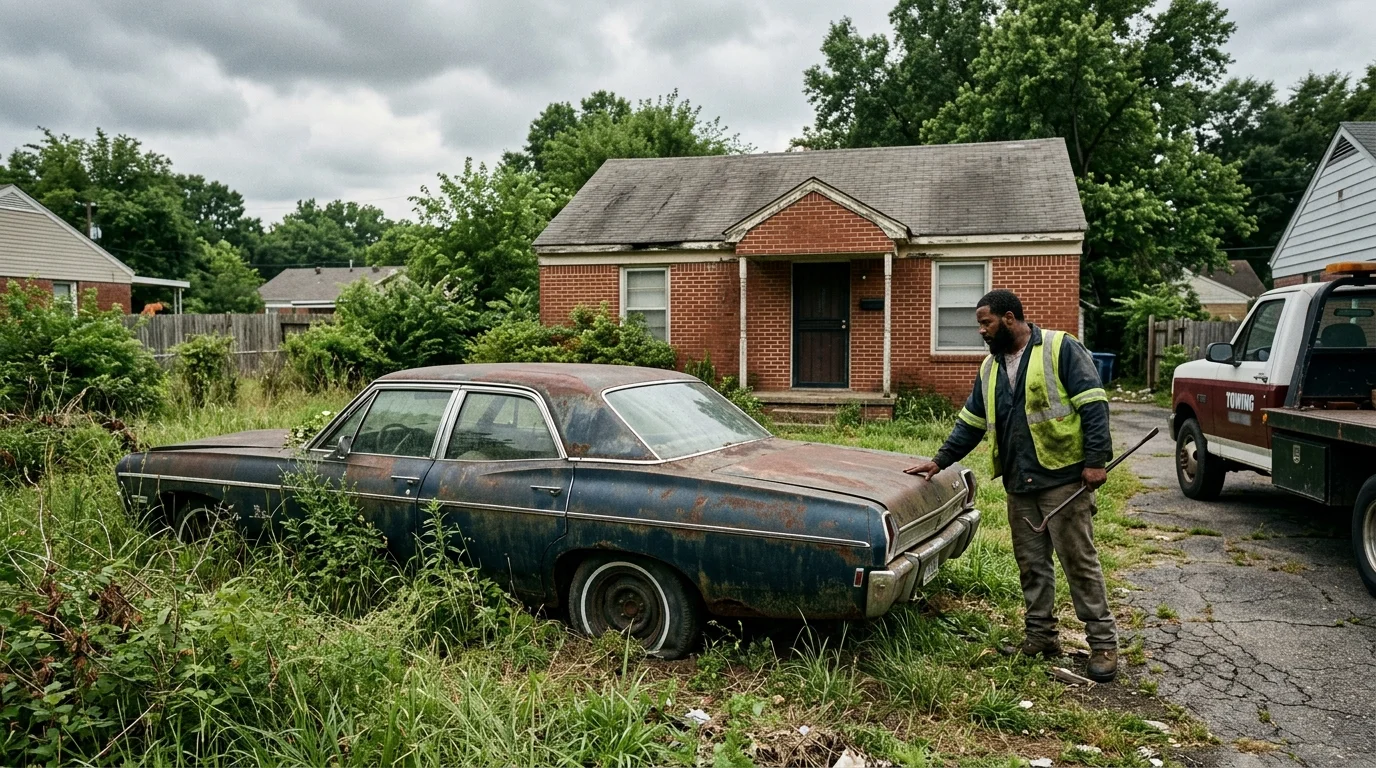
An abandoned vehicle removal service in Memphis can move a car from private property after the right person authorizes it. A vehicle left on a public street follows a different path through the agency responsible for that location.
The first step is identifying who controls the property. That answer determines who can request removal, what paperwork is needed, and where the vehicle may go.
Who can authorize removal from private property
Tennessee generally requires express written authorization before a non-consent tow. On private property not open to the public, that authorization may come from the property owner or an authorized agent. Quick Tow connects callers with local operators, but we don’t decide whether a vehicle legally qualifies for removal.
Inside Memphis, the written authorization should identify the person approving the tow. It should also record the vehicle’s year, make, model, color, and removal reason. Include the plate when available and the VIN when it can be determined.
Residential rental property has a separate rule. A landlord may remove an unauthorized vehicle after posting written notice on the vehicle for 10 days. Immediate removal may apply when the vehicle violates the landlord’s posted permit-parking policy. The abandoned-vehicle definition and the landlord notice process aren’t interchangeable.
Commercial and public-access lots also need care. A posted lot relying on Tennessee’s towing exception must display the garagekeeper’s name and phone number at every entrance and exit. Ordinary private-property towing doesn’t have a statewide sign-size or lettering rule. Written authorization remains the key control.
Our private-property towing referral service is for vehicles that don’t belong to the caller. If you own the unwanted car, start with junk car and abandoned vehicle removal instead. Ownership changes which documents and disposal options apply.
How a street report differs from a private-property call
A property owner can authorize work on property they control. They can’t order the removal of a vehicle from a Memphis street, public shoulder, or another person’s land. Those reports belong with the law-enforcement or public agency responsible for that location.
Tennessee’s current abandoned-vehicle definitions include several public-property situations. They include:
- A vehicle more than four years old left unattended for at least 10 days
- A vehicle in obvious disrepair left unattended for at least three days
- A vehicle parked illegally on public property for at least 48 hours
Private-property definitions differ. A vehicle left without consent on private property can qualify after 48 hours. The separate category for private residential property has no stated waiting period. Do not hang that 48-hour clock on residential property. A sixth category covers a vehicle stored, parked, or left in a garage, trailer park, or any storage or parking lot for more than 30 consecutive days. Those definitions don’t replace the authorization and landlord rules that may also apply.
The current rules appear in Tennessee’s enacted MOTION Act. Older references to Title 55, Chapter 16 are outdated because that chapter was repealed.
The approved sources don’t confirm every step in Memphis’s current street-report intake process. Check the responsible agency’s official reporting channel before assuming a report was accepted. MPD, the Shelby County Sheriff, and Housing and Community Development each send their completed tows through the Memphis city storage lot.
Location also matters across the metro. Southaven follows Mississippi law, while West Memphis follows Arkansas law. Tennessee rules shouldn’t be applied to a vehicle across either state line.
What information to gather before contacting anyone
Start with the exact pickup location and the property’s status. Note whether the vehicle sits on a public street, apartment lot, commercial lot, driveway, or private residential land. A curb in Midtown isn’t handled like a private lot along Lamar Avenue.
Record the vehicle’s make, model, color, and plate if visible. Add the VIN only when it can be read without entering or disturbing the vehicle. Note why removal is requested and when the vehicle was first observed. Those notes don’t establish a legal deadline, but they help the responsible party review the situation.
Property owners and managers should also gather:
- The owner’s or management agent’s name and contact details
- Proof that the caller controls the pickup property
- The name of the person authorized to sign removal paperwork
- Photos showing the vehicle’s location and nearby parking signs
- Any lease provision or permit policy relevant to the parking space
Tell the operator about missing wheels, severe damage, blocked access, or difficult loading conditions. Those details help determine the truck type and hookup difficulty. They can also affect the final cost.
If the vehicle belongs to you, gather the title before arranging disposal. Tennessee’s normal transfer uses the signed assignment section on the title. Lost-title and older scrap-only vehicles can follow different routes, explained in our guide to paperwork for junking a car in Tennessee.
Where a removed vehicle may be stored
A privately requested tow doesn’t automatically go to the Memphis city lot. Before authorizing removal, ask the operator for the storage facility’s name, address, contact method, and retrieval requirements. Tennessee treats permission to store a vehicle as a separate written-authorization duty.
When the vehicle owner isn’t present, the person towing must report the tow within one hour to the law-enforcement agency covering the pickup location. That report includes the VIN, plate, vehicle description, pickup location, and storage destination. The planned statewide motor-vehicle portal hasn’t been confirmed as operational, so don’t rely on an online lookup.
When a police or city tow already happened, use how to find a towed car in Memphis for locate steps. The city lot’s published impound fee is $135 plus $30 per storage day. Those are city fees, not Quick Tow prices.
How to confirm fees and paperwork before removal
Private towing costs can change with distance, vehicle size, time of day, truck type, and hookup difficulty. Ask for the full total with mileage included before agreeing. Also ask what circumstances could change that amount.
Ask the matched operator for the full total with mileage included, in writing, before you agree. The matched operator performs the work and contracts with you directly. There is no membership or annual fee.
Tennessee doesn’t set one statewide dollar cap for a non-consent tow. The maximum depends on the rate approved by the applicable Tennessee Highway Patrol district. A verified schedule covering Memphis wasn’t available, so confirm the current maximum before relying on any quoted district figure.
Two statewide limits are confirmed for vehicles towed or stored without the owner’s written authorization. A release fee above $100 is prohibited. A facility also can’t charge a gate, access, or release fee during normal business hours on a day when daily storage is charged.
If a tow has started but the vehicle hasn’t left its original parking location, the owner or operator may obtain an immediate release by paying the applicable release fee. Property managers should make sure the authorization record is complete before the truck moves.
Removal also doesn’t immediately transfer ownership to the property owner. The statutory process requires ownership verification within three business days, followed by notice to the owner and lienholders within three more business days. The reclaim period runs 20 days from the notice date before an unreclaimed vehicle proceeds toward public auction.
When to call us
Call when you control the private property, have the vehicle details, and need a working towing operator to handle the move. The recorded line takes calls 24/7 and matches the authorized property representative with a local operator. Call us at (901) 557-8700.