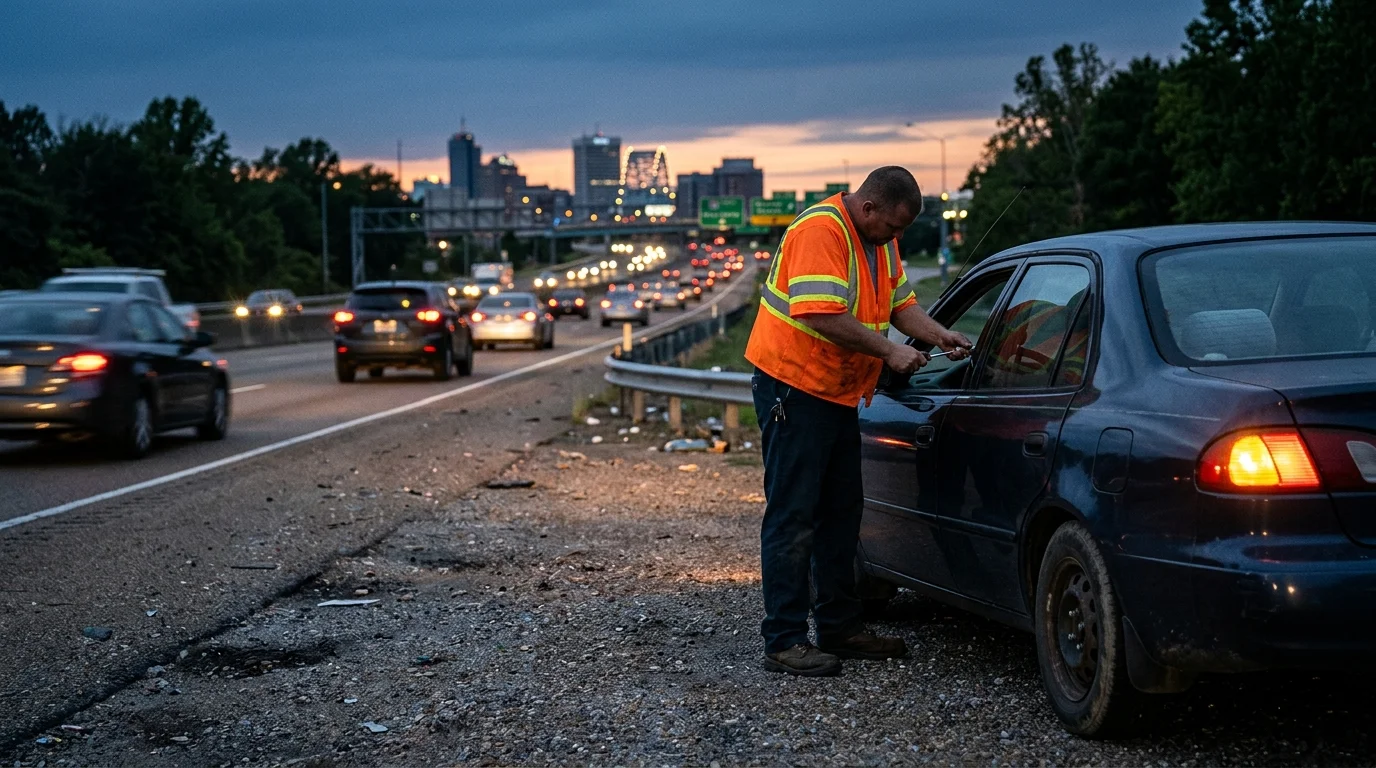
Yes, you can request roadside help in Memphis without auto insurance or a roadside club membership. Quick Tow Memphis handles these requests on a pay-per-call basis, with no membership or annual fee.
You pay for the service you request. Insurance and club enrollment aren’t required to place the call.
The short answer: yes, pay per call
A dead battery, flat tire, empty tank, lockout, or disabled car doesn’t require a roadside membership before you can ask for help. Our no-membership roadside service is available to drivers who want to arrange one job at a time.
Quick Tow Memphis is a referral service. We take your location and vehicle details, then match you with a local towing operator. That operator performs the work and contracts with you directly.
This distinction matters when you’re comparing choices. A roadside club usually involves an ongoing membership. An insurance benefit depends on the coverage attached to your policy. Pay-per-call service is a separate option. There is no annual fee, and you don’t have to join a program first.
You can also request help if you have insurance but didn’t add roadside coverage. Having an auto policy doesn’t automatically mean towing or roadside service is included. Tennessee doesn’t require insurers to include towing coverage with the minimum liability coverage required by state law.
If you’re asking whether you can get roadside assistance without being a member, the practical answer is yes. Tell us where the car is, what happened, and whether it can roll or steer. Those details help identify the right kind of service.
Being uninsured and being eligible to buy roadside help are separate issues. Pay-per-call help doesn’t change your insurance status or determine whether the car may legally return to the road.
What a no-membership call actually costs you
No membership doesn’t mean the job is free. It means you aren’t paying an annual fee before you can request service.
Our published standard light-duty hookup starts at $95. That figure is the hookup floor for a light-duty tow, not a promise covering the complete job. The operator’s total can change based on distance, vehicle size, time of day, truck type, and hookup difficulty.
Location can make a real difference. A car sitting in a Cordova shopping center isn’t the same job as a vehicle stopped beside I-240. A low-clearance car in Midtown may need different handling than a standard sedan on a level parking lot. A vehicle that can’t steer, roll, or shift into neutral can also affect the equipment needed.
Before agreeing, ask for the full total with mileage included. Ask what circumstances could change that amount. Ask the matched operator for the total in writing before you agree, plus an itemized invoice. The referral line can remind you to ask.
Give an accurate pickup point and destination. Include the vehicle’s year, make, model, and current condition. Mention a locked steering wheel, damaged tire, collision damage, low clearance, or a blocked parking position.
That information helps prevent a mismatch between the car and the truck needed for the job. It also gives you a clearer basis for reviewing the quoted total. Our broader roadside assistance service page explains the help you can request when a vehicle stops working around Memphis.
What your own insurance may already cover, and how to check
Roadside assistance and towing coverage are optional insurance add-ons in Tennessee. Whether your insurer covers a roadside bill depends on the endorsements in your own policy, not a statewide towing-coverage requirement.
Start with your current policy documents or insurer account. Look for language about roadside assistance, towing, or towing and labor. If the wording isn’t clear, contact the insurer and ask whether that coverage is active for the vehicle involved.
Ask what process you must follow before arranging service. You should also confirm what documentation the insurer needs from you afterward. Get that answer from the company handling your policy, since terms can differ between insurers and policies.
Don’t assume the logo on an insurance card means roadside help is included. Liability coverage and roadside coverage serve different purposes. One doesn’t prove the other is present.
If coverage is confirmed, follow the insurer’s instructions. If it isn’t included, you can still arrange pay-per-call assistance without buying a club membership. You can read more about the distinction in our guide to whether car insurance covers towing in Tennessee.
You can also call your insurer before calling us, provided you’re safely parked. If you’re exposed to moving traffic, focus first on getting away from the travel lane when that can be done safely. Insurance questions can wait until you aren’t standing beside traffic.
Keep the written total and itemized invoice from the operator. Those documents give you a clear record of the service, regardless of whether an insurer is involved.
TDOT HELP on the highways
Memphis drivers have another option on several major highways. The TDOT HELP program provides patrols on covered Tennessee interstates. Urban hours vary by day. Rural HELP covers I-269 from the Mississippi state line to Exit 19 from 6:00 a.m. to 10:30 p.m. daily, with on-call overnight support for major incidents.
Its Memphis routes include I-40, including the Hernando de Soto Bridge, plus I-55 from state line to state line. The program also covers the full I-240 loop and SR-385, also called Bill Morris Parkway.
Those corridors matter because a highway shoulder presents different risks than a parking lot. The Hernando de Soto Bridge carries I-40 across the Mississippi River. The Memphis & Arkansas Bridge carries I-55. A stopped vehicle near either crossing can affect traffic moving between states.
TDOT HELP’s listed services are flat changes, fuel delivery, minor mechanical help, and clearing blocking vehicles. HELP doesn’t tow a disabled car to a shop, home, or storage lot. Anything beyond lane clearance requires a private tow.
HELP also isn’t a roadside club replacement or private transport service. During HELP service hours, dial 511 and follow the Motorist Assistance prompts. Assistance is not guaranteed. Drivers elsewhere in Memphis, including neighborhood streets and parking lots, need another option.
Use TDOT SmartWay to check current Tennessee traffic, cameras, and incident information. That can help you describe your location and identify nearby congestion before arranging private assistance.
Don’t assume a patrol will provide a service that TDOT doesn’t list. For example, jump starts aren’t included in the verified TDOT HELP service list available for this page. If the car needs a tow, tell the referral line where it sits and whether it’s blocking traffic.
What to ask before you agree to the job
A short, specific conversation can prevent confusion. Start with the complete pickup location. On a highway, include the interstate, direction of travel, nearby exit, and whether you’re before or after the exit.
For local streets, give a recognizable cross street or business entrance. “Lamar Avenue” alone covers too much ground. Lamar carries US-78 and is a heavily used trucking corridor. A precise location helps distinguish a roadside stop from a parking-lot pickup.
Then describe the vehicle and its condition. Tell the operator whether it rolls, steers, and shifts into neutral. Mention collision damage, a missing wheel, low ground clearance, or anything blocking access to the car.
Before agreeing to the job, ask:
- What is the full total with mileage included?
- What could cause that total to change?
- What truck type is planned for the vehicle?
- Is the destination included in the written details?
- What paperwork will you receive?
Ask the matched operator for written authorization and related paperwork. An itemized invoice gives you a record of what was charged. The referral line can remind you to ask.
Confirm the destination before the operator moves the vehicle. A repair shop, home, and storage facility are different destinations. Make sure the place will accept the car when it gets there.
Location also affects jurisdiction. A pickup in Southaven is governed by Mississippi law, while a pickup in West Memphis is governed by Arkansas law. Tennessee towing rules shouldn’t be applied across either state line.
Finally, don’t wait beside an exposed traffic lane to compare options. Move to a safer position when possible, keep clear of traffic, and share the vehicle’s exact location.
When to call us
Call when you need pay-per-call roadside help, don’t have membership coverage, or need a working towing operator to move the vehicle. The line takes calls around the clock, and we’ll take the details and match you with a local operator. Call us at (901) 557-8700.