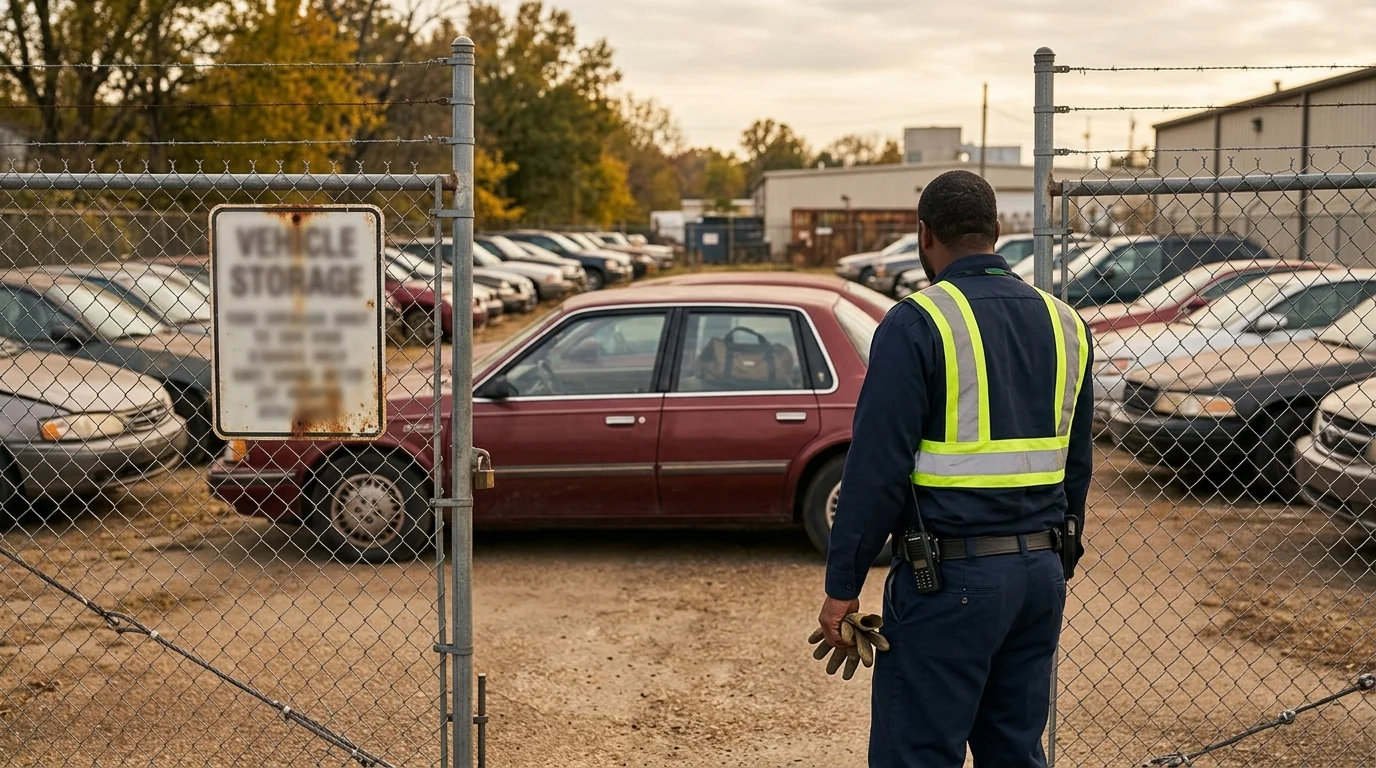
Your wallet, medicine, work gear, or family documents may still be inside the car. Start by locating the storage facility, then ask for access to personal property that isn’t physically attached. For a repossession, confirm the process with the lender and facility because no separate statewide retrieval procedure could be verified.
Start by finding who has the vehicle
First, identify where the car was picked up. The location determines which agency received the tow report and which rules apply.
For a Tennessee tow made while the owner wasn’t present, current Tennessee towing law requires the towing party to report the vehicle within one hour. The report goes to the law-enforcement agency covering the pickup location. It includes the vehicle description, plate, VIN, pickup location, and storage location. That record is public.
The statewide motor-vehicle portal’s operating status hasn’t been confirmed. Don’t wait for an online search that may not work. Contact the law-enforcement agency covering the place where the car disappeared. Our guide to finding a towed car in Memphis walks through that search.
If an MPD, Sheriff, or HCD wrecker took the car, locating it is finding a towed car in Memphis. This page is how to ask for unattached items after a wrecker tow versus a lender repossession.
For a private-property tow, ask the property owner or manager which company removed the car. For a repossession, ask the lender or account servicer for the repossession company’s name and storage location. Have the plate, VIN, make, year, and color ready.
A pickup in Southaven or West Memphis isn’t a Tennessee case. Mississippi or Arkansas law governs a tow originating across the state line. Confirm the jurisdiction before relying on any Memphis procedure.
Why belongings and vehicle release are separate requests
Memphis wrecker rules address belongings apart from possession of the vehicle. Personal property and cargo not physically attached to the vehicle must be released to the owner or a designee on request, unless MPD orders otherwise.
That means your request can stay narrow. Tell the facility you’re seeking unattached personal belongings, not release of the car. Name the items you expect to retrieve. A short written list can prevent confusion when an employee supervises access.
The rule doesn’t create published retrieval hours or state a retrieval fee. Call before traveling and ask when access is available. If the facility mentions a charge, request its written basis before paying. Don’t assume the MPD lot’s hours apply to a private storage facility or repossession location.
The reviewed sources also don’t confirm a statewide right to enter the vehicle before a tow leaves the original scene. Once a vehicle is stored under Memphis wrecker rules, the post-impound rule for unattached property is clear. Our broader guide explains personal property in a towed car and the limits of that rule.
A repossession requires extra care. The approved sources don’t establish a separate statewide access schedule, appointment process, or document list for repossessed vehicles. Ask the lender and the company holding the car to confirm their process in writing.
Keep the two requests separate during every call:
-
First, ask where the vehicle and belongings are located.
-
Next, request access only to unattached personal property.
-
Finally, ask what identification the facility requires for that visit.
You don’t need to resolve the vehicle’s release status just to explain which belongings you need. However, the facility may still require proof that you’re the owner or an authorized designee.
What identification and ownership proof to bring
Ask the facility for its belongings-access checklist before leaving home. No separate Memphis checklist for a belongings-only visit could be confirmed. Requirements for releasing the entire vehicle shouldn’t be presented as automatic requirements for retrieving property.
Still, certain documents can help the facility match you to the correct car. Bring a valid photo ID if the facility requests it. Keep the plate number or VIN available. Registration, title, or lease paperwork can also help establish your connection to the vehicle.
Those are full-release papers at the city lot. The document list lives on what to bring for a Memphis impound release. For belongings-only, ask the actual facility what ID it wants. A repossession yard is not the MPD lot checklist.
Also prepare an item list before the visit. Describe each item plainly, including where it was left. Mention medication, identification, keys, work equipment, or essential documents when requesting access. That doesn’t create priority under a confirmed rule, but it tells the facility exactly what you’re trying to recover.
Save the name of the facility, its instructions, and any appointment details. Bring only the documents it requests, plus anything needed to connect you with the vehicle.
How police holds and repossession can change access
A police hold can stop or limit access that would otherwise be available. MPD tells owners to check a criminal-investigation hold before attempting vehicle pickup. Memphis wrecker rules also allow MPD to direct that personal property shouldn’t be released.
If the facility cites a police hold, ask whether the restriction comes from MPD. Request the contact path for the unit that can confirm or remove it. The storage facility may not control that decision.
Don’t assume every police hold has the same effect. The approved sources don’t establish one statewide belongings-access procedure for held vehicles. Ask whether the order blocks the entire vehicle, certain property, or all access. Get the answer in writing when possible.
A repossession isn’t the same as an MPD impound. The MPD lot’s published documents and around-the-clock hours don’t establish the rules for a private repossession location. No verified statewide repossession schedule, retrieval fee, or appointment deadline appears in the approved sources.
When speaking with a repossession facility, state that you’re requesting personal belongings only. Ask who controls access, what identification is accepted, and whether an appointment is required. If the facility sends you to the lender, request the correct department and a written authorization process. If the lender sends you back, ask the facility to explain exactly what remains missing.
A parking-lot or apartment removal may instead involve private-property towing. In Memphis, that situation remains different from a lender-directed repossession. Written authorization and other towing rules may matter, but they don’t establish the lender’s process.
Jurisdiction matters here too. Tennessee rules shouldn’t be applied to a vehicle picked up in Southaven or West Memphis. Confirm the pickup location, storage location, and authority involved before escalating a dispute.
What to do if the facility refuses access
Start by asking for the precise reason. A refusal based on missing identification needs a different response than an MPD order. A disputed item may also be treated differently if the facility says it’s physically attached to the vehicle.
Ask the facility to provide these points in writing:
-
The reason access was refused.
-
The documents or authorization it says are missing.
-
Whether the refusal comes from MPD, the lender, or the facility.
-
The next available step for requesting unattached personal property.
If the vehicle is stored under Memphis wrecker rules, refer to the city’s requirement covering personal property and cargo not physically attached. The rule says those items must be released to the owner or designee on request unless MPD orders otherwise. Keep your request limited to those belongings.
For a disputed Memphis wrecker practice, contact the Permits Administrator or Wrecker Coordinator at (901) 636-6735 or permits@memphistn.gov. Include the company name, vehicle information, pickup location, storage location, refusal reason, and copies of written messages.
Our guide to rights after a Memphis tow explains other local protections. Don’t describe the Memphis complaint process as a statewide hearing right. No standalone Tennessee administrative hearing for this issue could be confirmed.
A repossession refusal may involve the lender, repossession company, or storage facility. The approved sources don’t confirm one statewide agency that resolves these access disputes. Ask each party to identify who made the decision and what written rule supports it. If the refusal continues, consider contacting a Tennessee attorney or legal-aid provider.
Keep call notes, emails, receipts, and photographs of any property returned. Don’t enter a fenced lot or vehicle without permission. A calm paper trail gives the responsible party a clear opportunity to correct the refusal.
When to call us
If the yard or lender has cleared the vehicle but it cannot leave under its own power, the recorded line takes calls 24/7 and matches you with a local operator who contracts with you directly. Call (901) 557-8700.