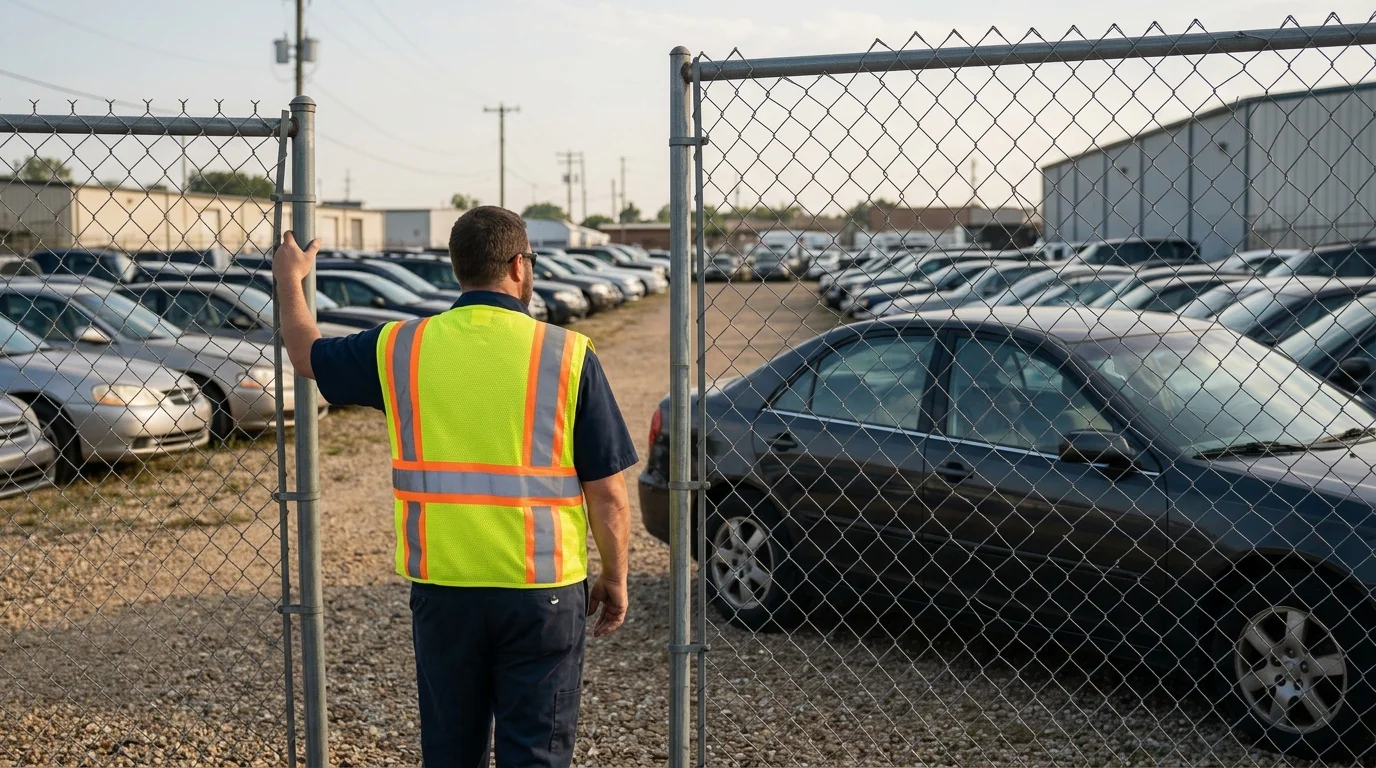
Your car is behind a storage lot gate. Your wallet, work bag, or house keys are still inside. In Memphis, city rules protect access to certain property, but the answer changes outside the city.
The short answer under the current Tennessee rule
For a Memphis tow, personal property and cargo not physically attached to the vehicle must be released to the owner or the owner’s designee on request. The exception is when the Memphis Police Department orders otherwise.
That’s a Memphis rule. The sources approved for this page don’t confirm an equivalent statewide right covering every Tennessee storage facility. The current state law is the 2025 MOTION Act, which replaced an earlier version of Tennessee’s towing law. Older references to Title 55, Chapter 16 describe repealed law and shouldn’t guide your request.
This distinction matters across the Memphis metro. A tow originating in Memphis falls under Tennessee and applicable Memphis rules. A tow beginning in Southaven falls under Mississippi law. One originating in West Memphis falls under Arkansas law. Don’t assume the Memphis property-release rule follows a vehicle across a state line.
The Memphis rule also separates belongings from the vehicle itself. Getting loose property doesn’t mean the storage facility must release the car. Ownership paperwork, towing charges, and a police hold may still affect vehicle pickup.
No property-retrieval fee is confirmed in the Memphis rule. It also doesn’t provide a separate schedule for accessing belongings. Ask the facility about its process before visiting, but don’t treat an unsupported fee or access condition as established law.
What may count as property separate from the car
The Memphis rule uses a clear boundary: personal property and cargo that aren’t physically attached to the vehicle. It doesn’t provide a detailed list covering every object a driver might leave inside.
Start by listing what you need. A wallet, keys, identification, work equipment, clothing, or a bag may seem separate from the car. Still, the approved city sources don’t classify each item individually. Tell the facility exactly what you’re requesting and ask whether it considers anything attached to the vehicle.
Don’t remove installed equipment or vehicle components without clear permission. If the facility says an item is physically attached, ask for that decision in writing. You’ll have a cleaner record if you need to raise the issue later.
The sources reviewed for this page don’t confirm special Tennessee access rules for medication or animals inside a stored vehicle. If either is involved, tell the facility immediately. Also contact the law-enforcement agency with jurisdiction and ask for direct instructions. Don’t assume the normal belongings process covers an urgent situation.
Firearms have a separate rule under current Tennessee law. A garagekeeper may remove and secure a firearm when it can be removed without damaging the vehicle. The firearm must be connected to that vehicle through a tag or log, secured in a firearm safe or equivalent storage, and followed by retrieval instructions for the owner. Follow those instructions rather than trying to collect the firearm through the ordinary property process.
How to request access before visiting the lot
First, confirm where the car was taken. For locate steps, use how to find a towed car in Memphis. This page is about asking the yard for unattached property once you know where the car is.
If you’re still locating the vehicle, use our guide to finding a towed car in Memphis. A car removed from an apartment, store, or other private lot may be at a different facility. Our private-property towing guide explains how that type of removal differs from a city impound.
When you call, say that you’re requesting personal property from a stored vehicle. Give enough information to identify the car. Keep the plate or VIN available, along with the make and year.
Ask four practical questions:
- Is the vehicle available for property access?
- What identification or authorization should you bring?
- Does an MPD order restrict access?
- When can the facility handle the request?
The city publishes specific documents for collecting the vehicle itself. An owner needs proof of ownership and valid photo identification. A non-owner needs a notarized statement from the owner, a legible copy of the owner’s photo identification, and vehicle details. The approved source doesn’t confirm that property-only retrieval requires the identical paperwork, so ask before leaving home.
The MPD Vehicle Storage Lot is open seven days, 24 hours. That doesn’t establish statewide access hours or guarantee that every private facility offers property retrieval at every hour. Confirm the process with the facility handling your car.
What changes when law enforcement places a hold
The Memphis belongings rule includes one direct exception: property must be released on request unless MPD orders otherwise. A criminal-investigation hold can therefore change what the storage facility is allowed to release.
Call before visiting if the vehicle was connected to an arrest, theft recovery, collision investigation, or another police matter. Ask whether the car has an active hold. The MPD Vehicle Storage Lot specifically tells owners to check a criminal-investigation hold’s status before pickup.
A hold’s exact scope shouldn’t be guessed. The approved rules don’t establish that every vehicle hold automatically blocks every personal item. Ask the facility or MPD three separate questions:
- Does the order prevent release of the vehicle?
- Does it also prevent access to personal property?
- Who can approve access or explain the restriction?
Write down the date of your request, the facility’s response, and the office that issued the hold. List the items you’re trying to retrieve. If access is denied, ask whether the denial comes from MPD or from the storage facility’s own interpretation.
Don’t enter a restricted yard or try to access the vehicle without permission. A clear request creates a record without escalating the situation. It also helps distinguish a police restriction from an ordinary disagreement about facility procedure.
The same assumptions don’t apply across the river or state line. If the tow began in Southaven or West Memphis, contact the storage facility and the law-enforcement agency responsible for that pickup. Tennessee and Memphis rules shouldn’t be presented as controlling those tows.
Where to turn if access is refused
Start by asking why the request was denied. The answer may involve an MPD order, uncertainty about your identity, questions about a designee, or a disagreement over whether the item is attached to the car.
Ask for the reason in writing. Include the vehicle description, your relationship to the owner, the property requested, and the date of your request. If you’re acting for the owner, ask what authorization the facility will accept before making another trip.
For a Memphis tow, refer to the city rule in plain language. Personal property and cargo not physically attached to the vehicle must be released to the owner or designee on request, unless MPD orders otherwise. You don’t need to rely on an outdated Tennessee statute or another state’s rules.
If a Memphis wrecker still refuses access without identifying an MPD restriction, contact the City of Memphis Permits Administrator or Wrecker Coordinator at (901) 636-6735 or permits@memphistn.gov. For the full protest sequence, see how to dispute a tow bill in Memphis. Keep your written request and any response from the facility.
Our guide to your rights after a Memphis tow covers written authorization, release fees, storage rules, and city complaint options. Those issues can overlap with a belongings dispute, but they don’t replace the specific property-release request.
For a tow outside Memphis, ask the agency with jurisdiction which rule applies. Statewide access details couldn’t be confirmed from the current Tennessee act for this page. Getting the correct authority is better than relying on a rule from the wrong city or state.
When to call us
If the car has been cleared for release but can’t leave under its own power, the move belongs to a working towing operator. The recorded line takes calls 24/7 and matches you with a local operator who contracts with you directly once the yard has cleared a needed tow. Call us at (901) 557-8700.