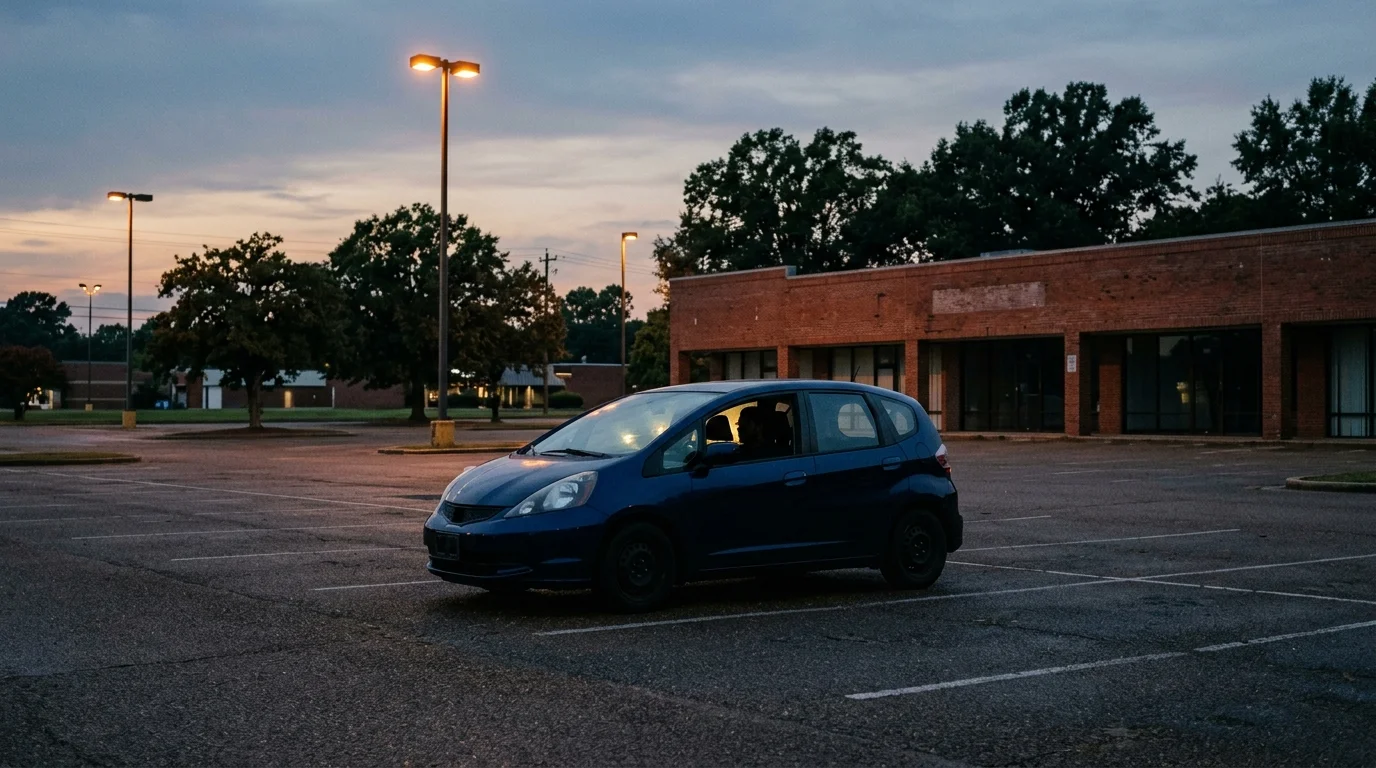
When your car won’t start in a parking lot, the noise it makes is your fastest clue. Before calling for a jump or tow, listen to what happens when you try the key. That sound can narrow the problem quickly.
Your car won’t start in a parking lot: listen first
Turn off the radio, climate controls, and interior lights. Press the brake, try to start the car once, and listen closely.
Complete silence can point toward several causes. The battery may be drained, but the car may also be rejecting the shifter position or electronic key. Check whether the dash lights appear. Then notice whether a security or key-shaped warning stays illuminated.
One solid click often points toward the starter or its electrical connection. A weak battery can sometimes produce the same symptom. Don’t assume a jump will solve it based on one click alone.
Rapid clicking usually means the starting system isn’t getting enough electrical power. The battery or one of its connections deserves attention first. Dash lights may still work because starting the engine demands more power than lighting the dashboard.
A strong, steady crank is different. The starter is turning the engine, so a basic jump may not address the cause. Fuel delivery, ignition, or an anti-theft lockout could be involved. Repeated cranking can also drain the remaining battery power.
Record a short video of the sound and warning lights. That gives a roadside provider or repair shop better information. Share your parking row, nearest entrance, and a visible landmark too. A sprawling lot near Wolfchase or along Poplar Avenue can be hard to navigate from a street address alone.
Dead battery, dying starter, or something cheaper than both
A drained battery often announces itself through rapid clicks, dim lights, or electrical accessories that fade during a start attempt. An interior light left on can be enough to create trouble. A loose or corroded connection can produce similar behavior.
Look at the battery only if you can do so safely. Don’t touch damaged cables or attempt a repair in the lot. Never try to jump a battery that looks swollen or appears to be leaking. Arrange professional help instead.
A starter problem often produces one firm click without the engine turning. It may also behave intermittently. The car might start once and refuse the next attempt. A jump can’t repair a failed starter, although low battery power can imitate one.
Before blaming either part, check the simpler possibilities. An automatic transmission may not recognize that the shifter is in Park. A key or security-system problem may also block starting. Those issues can leave the battery, lights, and starter appearing normal.
If a jump gets the engine running, that result doesn’t identify the full cause. The battery may need testing, or the charging system may not be restoring its power. Avoid treating one successful start as proof that the problem has disappeared.
Our Memphis jump-start service page explains what to share when requesting help. If you’ve already confirmed the battery is the likely problem, the jump-start service guide covers the next decision.
The two no-cost fixes worth trying before you call
Start with the shifter. Keep your foot on the brake and set the parking brake. Move the selector out of Park, then return it firmly to Park. Try the ignition once more without forcing the key or selector.
If nothing changes, consult the owner’s manual before trying to start in Neutral. Some vehicles permit it, while the correct procedure depends on the model. A car that starts only after moving the selector needs inspection. The symptom can return after the next stop.
Next, look for a security light or a message about the key. Turn the ignition off and remove the key if the vehicle uses one. Lock and unlock the car with its normal remote or physical key, then retry. A spare recognized key may help identify whether the first key is involved.
Anti-theft reset steps differ between vehicles. Don’t follow a random sequence that asks you to disconnect wiring or defeat the system. The owner’s manual is the right source for your car.
If the vehicle must remain in the lot, tell the store or property manager. Ask for permission and document who approved the stay. Tennessee’s enacted 2025 towing and abandoned-vehicle act treats a vehicle left on private property without consent as abandoned after 48 hours. A separate category covers vehicles left in a garage, trailer park, storage lot, or parking lot for more than 30 consecutive days.
Those thresholds don’t grant permission to leave a car wherever it stopped. Property owners can authorize private-property towing under applicable rules. A Southaven or West Memphis parking lot also falls under another state’s law, not Tennessee’s.
Memphis heat is a battery killer, not just cold
Cold mornings get blamed for weak batteries, but Memphis summers do plenty of damage first. Sustained heat wears a battery internally. A later cold snap may simply reveal a battery that summer already weakened.
That pattern can catch drivers after a normal shopping stop. The car starts at home, sits in a sunny Cordova or Bartlett lot, then offers clicks at the next attempt. Similar failures happen outside grocery stores in Hickory Hill or along Summer Avenue.
Heat-related wear isn’t something you can confirm by looking through the windshield. Check for obvious battery damage only from a safe position. Don’t attach jumper cables to a swollen or leaking battery. Keep sparks, cigarettes, and open flames away from the battery area.
A clean-looking battery can still be weak. Likewise, visible corrosion doesn’t prove the battery itself has failed. Testing the battery, connections, and charging system gives a better answer than replacing parts by guesswork.
If the car starts after a jump, consider where you’ll go next. A repair shop or parts counter that can test the system is more useful than another long shopping stop. Shut the engine off only when you’re prepared for the possibility that it won’t restart.
Memphis drivers also need to separate parking-lot trouble from freeway trouble. TDOT’s HELP program patrols covered Tennessee interstates around Memphis during published urban hours that vary by day. Rural HELP also covers I-269 from the Mississippi state line to Exit 19 from 6:00 a.m. to 10:30 p.m. daily, with on-call overnight support for major incidents. During service hours, dial 511 and follow the Motorist Assistance prompts. Assistance is not guaranteed. The published program information does not confirm jump starts, and HELP does not tow to your chosen shop, home, or lot.
Jump or tow: making the call that does not waste a trip
Choose a jump when the symptoms point toward lost battery power. Rapid clicking, dimming lights, or an accessory left on all support that choice. The battery must look intact, and the car must be parked somewhere safe for the connection.
Choose a tow when the engine cranks strongly but won’t catch. A tow also makes sense when there’s a single click with no engine movement, visible battery damage, damaged wiring, or a security problem that won’t clear. Those situations need diagnosis beyond adding battery power.
The destination matters too. If the car probably needs repair, arrange transport to a shop that can accept it. Confirm the shop’s address and hours yourself before you agree. Taking the vehicle home may only create a second towing need later.
A parking garage can require different equipment from an open grocery lot. Tell the provider about clearance limits, tight ramps, locked gates, blocked wheels, and the vehicle type. Mention whether you can shift into Neutral and whether the steering unlocks. Don’t try to push the car through active parking-lot traffic.
For towing, distance, vehicle size, time of day, truck type, and hookup difficulty can change the total. Ask for the full amount with mileage included before agreeing. Ask what circumstances could change it. Our guide to Memphis towing costs explains those cost drivers without presenting someone else’s fee as ours.
Quick Tow Memphis is a referral service. We take the location and symptoms, then match the caller with a local operator. The operator performs the work and contracts with the customer directly. If the car can’t start or move safely, emergency towing may be the better choice than repeating an unsuccessful jump.
When to call us
Call when the battery looks damaged, the engine cranks without starting, or the car can’t move safely under its own power. The line takes calls around the clock, and we’ll use your symptoms to match you with a local towing operator. Call us at (901) 557-8700.