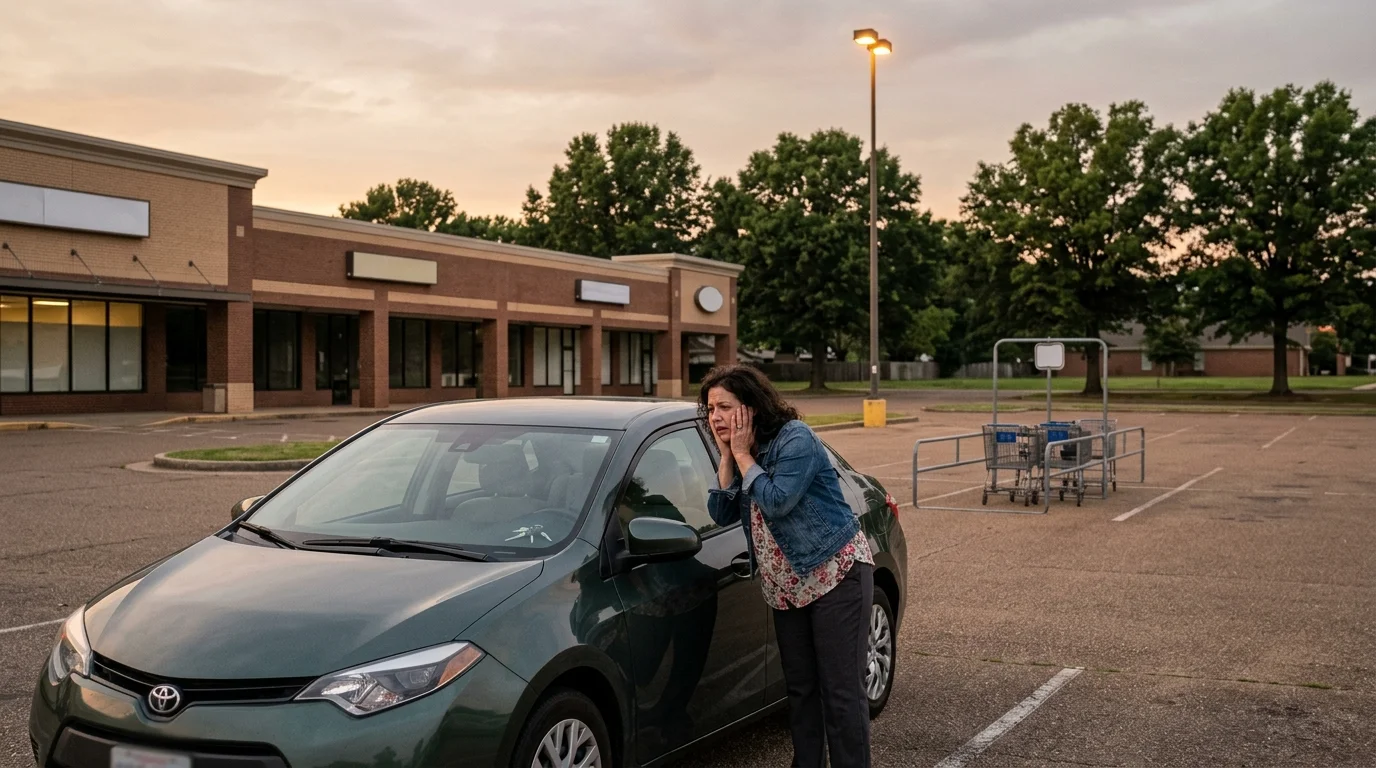
A car lockout service in Memphis should start by identifying the real problem. Your next step depends on whether the key is trapped, missing, broken, or no longer opening the car.
Location matters too. A locked car in an East Memphis grocery lot presents a different situation from one stopped beside I-240.
Three ways car lockout service in Memphis ends the job
The first possible outcome is access at the car. A trained provider evaluates the vehicle, explains the intended approach, and tries to open it without damaging the door or glass. Our car lockout service page explains how to request that kind of help.
The second outcome is using a spare key. If someone can bring one, that may be the simplest answer. Confirm that the spare matches the vehicle before sending anyone across Memphis. A key for another family car won’t solve the problem.
The third outcome is towing the car. This becomes relevant when the key is missing, broken, or tied to another problem that can’t be resolved where the car sits. The destination might be a locksmith, dealership, repair facility, home, or another location you choose.
Ask the provider to explain which service you’re approving. An unlock call shouldn’t quietly become a tow without a new conversation about the work and total cost.
Price depends on the situation. Distance, vehicle size, time of day, truck type, and hookup difficulty can affect the total when towing is involved. Ask for the full total with mileage included before agreeing. Ask what circumstances could change it.
Ask the matched operator for the total in writing before you agree. It also provides an itemized invoice. If towing becomes necessary, your insurer’s role depends on your policy, not Tennessee law.
Keys locked in a running car, and why that one is different
A running car changes the information you need to share. Tell the recorded line that the engine is on and where the keys are visible. Mention any person or animal inside the vehicle immediately.
An urgent threat to a person or animal isn’t an ordinary service call. Contact emergency services instead of waiting for a roadside referral. Don’t attempt an improvised entry that could damage the car or make the situation harder.
Highway location also changes the call. Give the road, travel direction, nearest exit, and visible landmark. “On the bridge” isn’t enough in Memphis. The Hernando de Soto Bridge carries I-40, while the Memphis & Arkansas Bridge carries I-55.
The TDOT HELP program patrols covered Tennessee interstates around Memphis during published urban hours that vary by day. Rural HELP also covers I-269 from the Mississippi state line to Exit 19 from 6:00 a.m. to 10:30 p.m. daily, with on-call overnight support for major incidents. During service hours, dial 511 and follow the Motorist Assistance prompts. Assistance is not guaranteed.
TDOT’s published service list includes flat changes, fuel delivery, minor mechanical help, and clearing blocking vehicles. Lockout service isn’t on that list. HELP also doesn’t tow a vehicle to a shop, home, or storage lot.
That means a lockout still calls for private roadside assistance. Our guide to roadside assistance in Memphis can help you compare the service needed before authorizing a call-out.
What the tech needs from you before they roll
Good information helps the matcher describe the job so the operator brings the right approach. Start with your exact location. In a shopping center, name the entrance and nearby storefront. In a parking garage, give the level and section. On a highway, provide the route and direction.
Next, describe the vehicle. Give its year, make, model, body style, and color. Say whether the keys are visible inside, locked in the trunk, broken, or completely missing. Mention whether the engine is running.
Explain what you already tried, but don’t keep experimenting while arranging service. The useful point is whether another door opened, a spare exists, or the vehicle displayed a message when you tried the key.
The recorded line also needs to know whether the car can remain where it is. A private lot, narrow shoulder, apartment entrance, and loading area create different working conditions. Share any access instructions needed to reach you.
Memphis Metro crosses three states. Be precise about whether you’re in Memphis, Bartlett, Germantown, Southaven, or West Memphis. A service originating in Mississippi or Arkansas falls under that state’s rules, not Tennessee’s.
Quick Tow Memphis is a referral service. The line takes calls 24/7; we collect the details, and match callers with local tow operators. The matched operator performs the work and contracts with the customer directly.
Before you agree, confirm the requested service, destination if towing becomes necessary, and written total. For a tow, make sure mileage is included. Ask what could change the amount after the operator inspects the vehicle.
Modern locks, and the damage risk nobody mentions
Vehicle details aren’t small talk during a lockout call. Door construction, window edges, weather seals, trim, and nearby electronics all affect how an operator evaluates access.
A rushed attempt can turn a lockout into a repair. Damage may not be obvious from several feet away. Bent trim, a disturbed seal, or a door that no longer closes correctly can become the larger problem.
Ask the operator to explain the planned method before work begins. You don’t need instructions for doing it yourself. You need enough information to understand what will touch the vehicle and when the operator would stop.
The best decision may be not to force access. If the provider can’t identify an appropriate entry approach, towing the car can protect it from an escalating attempt. Agree on the destination before the car is moved.
Also separate a true lockout from a key problem. A key trapped on the seat is different from a missing key, a broken key, or a vehicle that isn’t responding to the key you have. Describe what happened in plain language instead of diagnosing it yourself.
Take clear photos of the door, glass, and nearby trim before service starts. Review the same areas when the work ends. If towing replaces the unlock attempt, ask for the revised work and total in writing before authorizing it.
Don’t accept a vague promise that every vehicle opens the same way. The provider should evaluate the actual car in front of them and explain the next step.
Proving the car is yours
Ownership checks help prevent someone from gaining access to a vehicle they don’t control. Verification practices can vary, so ask what the provider requires before you agree.
Keep a government-issued photo ID available. If the registration is locked inside the car, say that during the first call. Don’t wait until the operator arrives to explain that your paperwork is inaccessible.
Tell the recorded line when the vehicle is rented, leased, employer-owned, or registered to another family member. Keep the rental agreement, lease information, company authorization, or registered owner’s contact details available when they apply.
A photograph of paperwork on your phone may help explain the situation. Don’t assume it will replace the provider’s required documents. Ask what will be accepted before agreeing to the service.
If the name on your ID differs from the registration, explain why. A recent purchase, family vehicle, rental, or company car may require additional verification. Clear details make it easier for the provider to tell you what comes next.
Don’t ask a provider to bypass an ownership check. If you can’t establish your connection to the vehicle, arrange for the registered owner or authorized party to participate.
A missing car is a different problem from a lockout. If the vehicle isn’t where you left it, first determine whether it was moved, impounded, or stolen. Don’t order an unlock service until you’ve located the vehicle and confirmed that access is the actual issue.
When to call us
Call when the key is inaccessible and the vehicle needs professional entry or transport. We’ll take the details and match you with a local operator who can assess the car and perform the approved work.
Call us at (901) 557-8700.