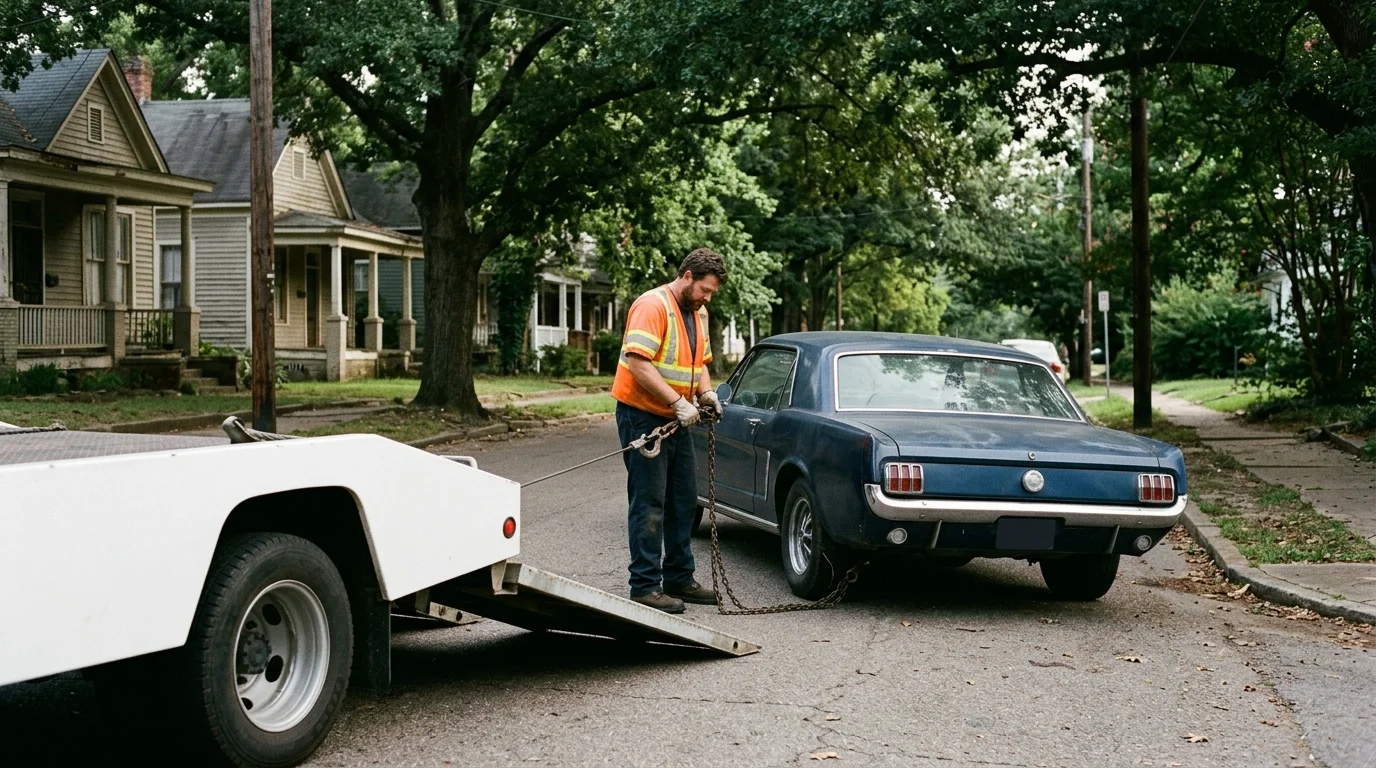
Moving a classic car starts with choosing equipment that fits its condition. A flatbed may reduce road contact, but it isn’t automatically right for every vehicle or pickup location. The operator needs specific details before making that call.
Why vehicle condition matters more than the badge
“Classic,” “luxury,” and “exotic” describe broad groups of vehicles. Those labels don’t tell an operator whether the car rolls, steers, stops, or clears a loading surface. Its present condition matters more than its badge.
Start with what happened. A running collector car leaving storage presents a different job from a damaged car after a collision. A vehicle with locked wheels also needs a different assessment from one that rolls freely.
Age alone doesn’t explain the setup, either. Tell us about anything unusual or changed since the car left the factory. That includes suspension changes, wider wheels, body additions, or parts hanging below the normal body line. Don’t rely on a model name to communicate those details.
Visible condition matters too. Mention damaged wheels, loose bodywork, leaking fluids, or glass that’s already broken. Don’t try to move loose pieces beside traffic. Describe them from a protected location and let the operator decide what comes next.
Quick Tow Memphis is a referral service. We gather the job details and match callers with local towing operators. The operator performs the work and contracts with the customer directly. Our exotic and classic vehicle towing service explains how to begin that match.
The same intake works for luxury car towing in Memphis. Clear details help the operator evaluate the car itself, not assumptions attached to its name.
When a flatbed may reduce contact with the road
A flatbed may fit when the goal is limiting contact between the vehicle and roadway during transport. It can also make sense when the owner doesn’t want the car’s wheels rolling for the trip. That still doesn’t make it a universal answer.
Loading is a separate part of the decision. The operator must consider the car’s clearance, wheel condition, steering, brakes, and pickup position. A low car inside a tight garage may require a different plan than the same car sitting in an open lot.
Tell us what matters most before dispatch. If the vehicle can’t roll, say so. If one wheel sits at an angle, identify which one. If the parking brake won’t release, don’t describe the car as merely “not starting.”
Ask the operator how the proposed equipment matches those conditions. You can also ask where contact points and restraints are expected. The operator should make the equipment decision after reviewing the actual vehicle and access.
Our flatbed towing page covers that service option. It’s a useful starting point, not a substitute for an operator’s assessment at the scene.
Avoid guarantees that any tow method eliminates damage. Existing damage, vehicle condition, and site access can change the job. A careful description gives the operator better information before equipment is sent.
What to disclose about clearance, steering, and brakes
Begin with ground clearance. If you know the lowest point, share it. If you don’t, say where the car appears closest to the pavement. Photos from the front, rear, and both sides can help show the situation without guessing at a measurement.
Next, describe the wheels and tires. Note any flat tire, missing wheel, locked wheel, or visible damage. Say whether the car rolls at all. Don’t push or test it near active traffic just to answer that question.
Steering and brakes need equally plain answers. Tell us whether the steering wheel turns and whether the front wheels respond. Explain whether the brakes hold, drag, or appear unavailable. If you haven’t tested them, say that instead of assuming they work.
Mention modifications separately. Lowered suspension, an extended front spoiler, side exhaust, wider tires, or recent restoration work may affect the operator’s planning. Describe what you can see and what you know was changed.
Finally, explain access. Is the car inside a garage, behind a gate, beside a curb, or at an angle? Mention the direction it faces and anything blocking a straight approach. Include low branches, parked vehicles, columns, or a narrow entrance.
These details aren’t busywork. They give the towing operator a clearer picture before choosing equipment. They also help separate a straightforward transport from a recovery that needs a different approach.
How Memphis streets and garage access affect loading
Location can change the loading plan before the car moves. A classic parked inside a Midtown garage presents different access questions than one stopped beside I-40. A Cordova driveway, an East Memphis parking structure, and an open commercial lot also offer different working space.
Give the exact pickup position, not only the street address. Say whether the vehicle is underground, behind a coded gate, or facing a wall. If another vehicle blocks the approach, arrange access before dispatch when possible.
Memphis corridors add another layer. Lamar Avenue carries US-78 and SR-4. TDOT’s Memphis Congestion Study describes it as the region’s top congested state road and a critical but clogged trucking corridor. Don’t step into traffic there to inspect underneath a disabled car.
The river crossing matters too. The Hernando de Soto Bridge carries I-40. The Memphis & Arkansas Bridge carries I-55. Share the correct interstate and travel direction so the operator gets an accurate location.
You can check TDOT SmartWay for current traffic, cameras, and incident information. If you’re in an exposed traffic lane or immediate danger, treat personal safety as the first issue.
State lines also matter. A pickup in Southaven or West Memphis falls under that state’s rules, not Tennessee’s. State the city and side of the river clearly when requesting the tow.
What to confirm before the operator is dispatched
Confirm the destination first. Provide the shop, storage location, home, or event site receiving the car. Make sure someone there can accept it and that the destination has suitable access.
Then confirm the vehicle details. Give the year, make, model, current condition, and pickup position. Include clearance concerns, wheel condition, steering, brakes, modifications, and anything loose or damaged. Share useful photos when requested.
Ask what towing method the operator proposes and why it fits the information provided. If the plan changes after the operator sees the vehicle, ask what changed. Don’t authorize improvised work you don’t understand.
Pricing should be equally clear. Distance, vehicle size, time of day, truck type, and hookup difficulty can affect the total. Ask for the full amount with mileage included before agreeing. Also ask what conditions could change that amount.
Quick Tow can put the total in writing before dispatch. The operator contracts with you directly and sets the final price. Our Memphis towing cost guide explains the main questions to ask before approving a job.
Remove loose personal items when you can do so without entering traffic or moving the vehicle. Keep keys available and tell the operator about any alarm, battery cutoff, hidden ignition switch, or special starting procedure. If you don’t know how a feature works, don’t experiment during loading.
A short, accurate intake protects the decision. It lets the operator evaluate the car, the site, and the destination together.
When to call us
Call when a classic, exotic, or low-clearance vehicle needs a towing operator to assess the car and access conditions. Our line takes calls 24/7, and we’ll gather the details needed for a local operator match. Call us at (901) 557-8700.