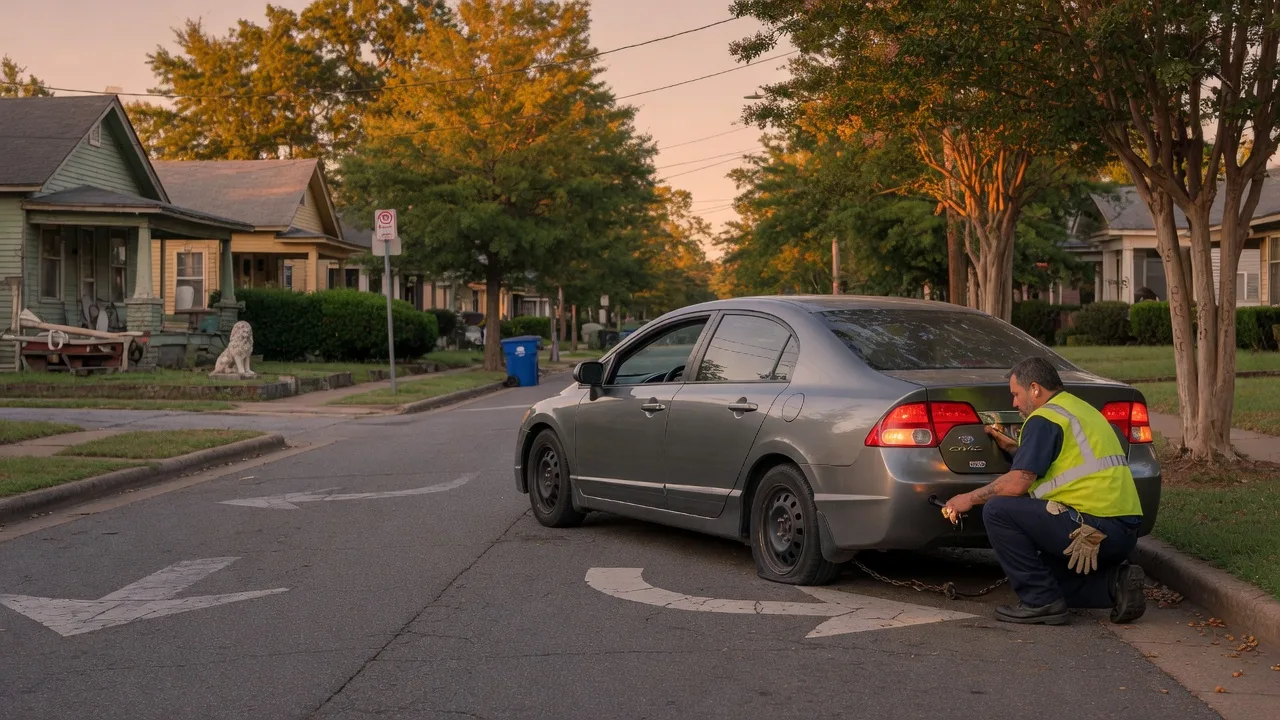
A breakdown in Midtown can leave you beside moving traffic or stuck inside a busy lot. For Midtown Memphis towing, your exact location and the car’s condition determine what kind of help fits.
Pin down your exact Midtown location
Start with the street, nearest cross street, and direction you were traveling. “Midtown” covers several distinct areas, so the neighborhood name alone isn’t enough.
A driver near Union Avenue needs to give a different location than someone near Madison Avenue. The same applies around Cooper-Young and Overton Square. Share the business or property name when you’re in a surface lot. Then identify the entrance closest to your car.
A phone location pin helps, but add plain directions. Location services can place the marker behind a building or on another street. Tell the operator whether your car is:
- At the curb or in a travel lane
- Inside a surface lot or parking garage
- Near a gate, alley, or narrow entrance
- Facing toward or away from the exit
- Blocking another vehicle or access point
Describe the vehicle too. Give its year, make, model, color, and drivetrain if you know it. Mention visible damage, locked wheels, low clearance, or a parking brake that won’t release. Those details help the operator choose a suitable towing method.
Midtown isn’t the same towing setting as the riverfront or Poplar Avenue office areas. Use our downtown Memphis breakdown guide when you’re west of Midtown. Our East Memphis car trouble guide covers the Poplar office-park corridor farther east.
Keep clear of Union and Madison traffic
Your first goal is to give the operator a precise pickup location. State whether the car stopped in a travel lane, at the curb, or inside a lot.
If the car can still move and you can relocate it safely, look for a nearby curb position or surface lot. Don’t force a damaged or unresponsive car farther down the road. Tell the operator exactly where it stopped and whether it can roll, steer, or shift into neutral.
Union Avenue and Madison Avenue require especially clear location details. A vague Midtown address can put the arriving operator on the wrong side of the street or near the wrong entrance. Give the cross street, your direction of travel, and a visible property name.
Stay with the car only when the location allows it. If you step away from the vehicle, tell the operator where you’ll wait. Keep your phone available in case the operator needs better access directions.
Report whether the vehicle is stuck against a curb, down a slope, or in another difficult position. Those details help the operator assess the pickup.
For traffic conditions beyond the immediate block, TDOT SmartWay provides current Tennessee incident and camera information. Its highway information won’t replace the precise Midtown block, lot entrance, or garage level the operator needs from you.
Choose roadside help or a tow
Not every car breakdown in Midtown requires transport. The right choice depends on what failed and whether the vehicle can be driven safely afterward.
Explain what happened before requesting equipment. Useful details include whether the engine stopped, the car won’t start, a tire is damaged, warning lights appeared, or fluid is visible. Don’t guess at the mechanical cause. Describe what you saw, heard, and felt.
Roadside assistance may fit when the problem can be handled where the vehicle sits. If the car still won’t operate normally, towing it to a chosen destination is the clearer next step. Emergency towing also fits when the vehicle can’t be safely moved under its own power.
Tell the operator about the drivetrain and exact model year. Transport instructions can differ between vehicles that look similar. The vehicle’s towing or emergency-transport section is the right place to confirm its requirements.
For example, official manufacturer guidance differs among specific Subaru, Honda, Mazda, Ford, and Chevrolet models. That’s why one towing setup shouldn’t be treated as universal. Recreational towing instructions also aren’t a substitute for a disabled-vehicle transport plan.
Quick Tow Memphis is a referral service. We take the details and match callers with a local operator. That operator performs the work and contracts with the customer directly. The line takes calls around the clock, and your call routes to the operator covering your zone.
Explain tight streets and garage access
Midtown access can change from one property to the next. A street pickup near Cooper-Young isn’t the same job as a vehicle inside an Overton Square garage or behind a surface-lot gate.
Before dispatch, check the route between the car and the street. Tell the operator about low ceilings, sharp turns, narrow aisles, ramps, locked gates, or parked vehicles limiting access. If you see a posted clearance, read it exactly. Don’t estimate it.
The operator also needs to know the garage level and whether the vehicle can roll. Give the nearest stairwell, elevator, or entrance marker if one is posted. Keep the phone screen or location pin available, but don’t rely on it alone.
A standard towing vehicle may not fit every garage entrance. The vehicle’s position can also change the loading plan. A car facing a wall, sitting between closely parked vehicles, or unable to release its parking brake needs an accurate description before equipment is selected.
Don’t promise property access on behalf of a garage, apartment complex, restaurant, or lot. If a gate must be opened or a parking procedure isn’t posted, contact the property controlling that entrance. Ask where the operator may enter and whether someone must meet the vehicle.
The same rule applies to event or reserved parking. Procedures can vary by property, and no single Midtown rule should be assumed. Confirm access with the property before the operator arrives.
Set the destination before dispatch
Choose where the car should go before requesting the tow. That might be a repair shop, your home, or another location willing to receive it. Confirm that the destination will accept the vehicle, especially outside its normal business hours.
Share the complete destination address. A shop name alone can cause confusion when several locations use similar names. Tell the receiving property that the car is coming and ask where it should be left.
If the vehicle needs a particular transport method, mention that before dispatch. Check the owner’s manual for the exact model year and trim. Also report whether the car can steer, roll, shift, and release its parking brake.
Distance, vehicle size, time of day, truck type, and hookup difficulty can affect the total. Ask for the full amount with mileage included before agreeing. Ask what circumstances could change it.
Quick Tow can put the total in writing before dispatch. You can also request an itemized invoice and the related authorization paperwork. The service is pay-per-call, with no membership or annual fee.
Review the pickup and destination together before the call ends. Confirm the Midtown block or lot, the entrance, the car’s condition, and the receiving address. Clear information helps prevent a second destination decision while the vehicle is already being loaded.
When to call us
Call when your car can’t leave Midtown safely or the pickup needs professional towing equipment. Quick Tow Memphis will take the details and connect you with the operator covering your zone. Call us at (901) 557-8700.