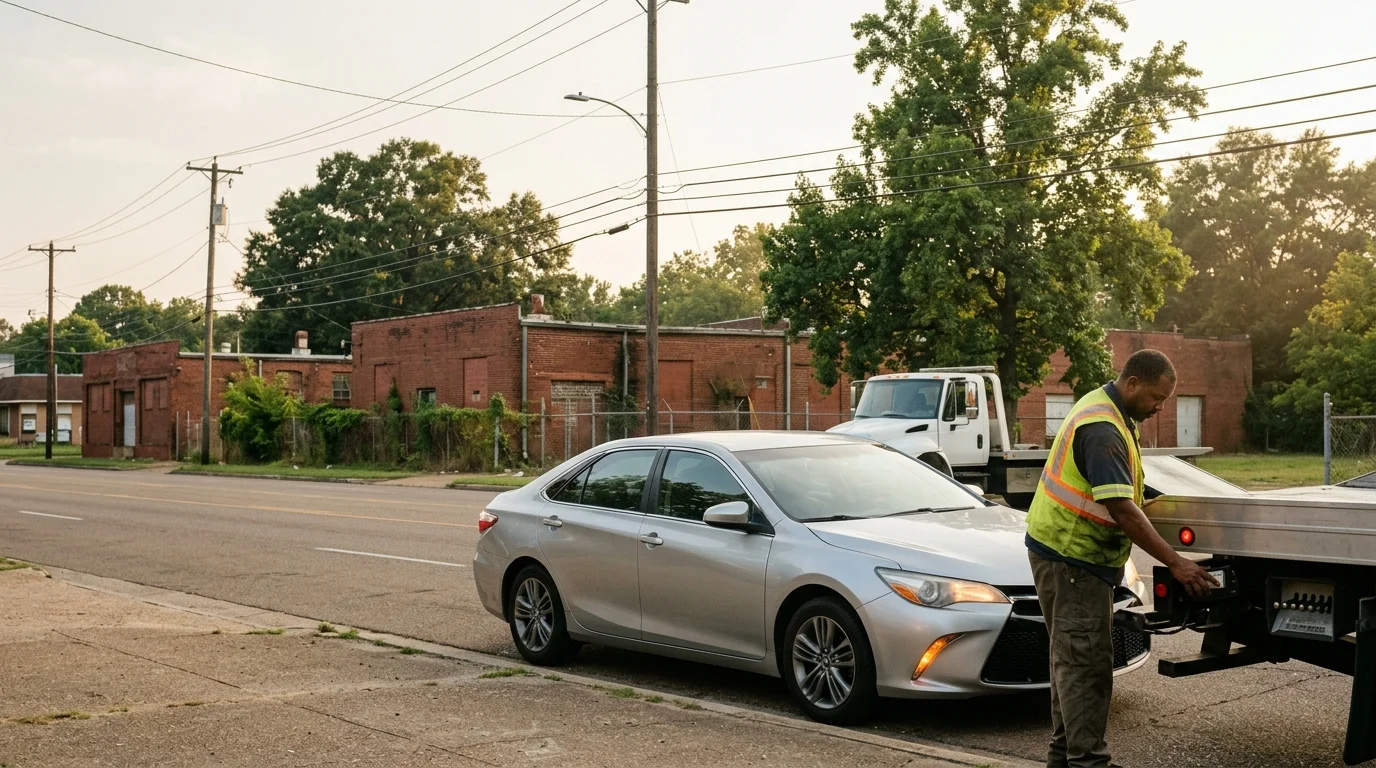
The best towing companies in Memphis fit the vehicle, location, and destination. City approval matters, but so do clear paperwork and the right equipment. Choose for the job in front of you, not from a generic list.
What the best towing companies in Memphis ask first
A towing operator can be a good fit for one move and the wrong fit for another. Start by describing the vehicle, its condition, and its exact location. Tell the operator whether the wheels roll and where the vehicle needs to go.
A stalled sedan beside I-240 calls for a different plan than a damaged vehicle in Midtown. A pickup near the Hernando de Soto Bridge sits along I-40. The Memphis & Arkansas Bridge carries I-55. Lamar Avenue carries US-78 and SR-4. Those details help the operator understand the route before accepting the job.
Use emergency towing when a disabled vehicle needs to leave the roadway or shoulder. If you specifically want the vehicle carried on a flat deck, ask about flatbed towing when you describe the job. Don’t assume every available truck matches every vehicle.
Destination matters too. Name the repair shop, home, storage facility, or other permitted drop point. Distance, vehicle size, time of day, truck type, and hookup difficulty can all move the total. Our guide to tow costs in Memphis explains how to discuss those factors before agreeing.
A pickup originating in Southaven or DeSoto County falls under Mississippi law. One beginning in West Memphis or Marion falls under Arkansas law. Don’t apply Memphis rules just because the destination sits across the state line.
The permit question most Memphis roundups skip
Inside Memphis city limits, wrecker companies must be approved by the Memphis Transportation Commission. Approval for the MPD Wrecker Rotation is separate. An operator working city calls shouldn’t blur those two categories.
Ask which approval applies to your pickup. Get the operator’s business name before agreeing to the move. A vague claim about being approved somewhere isn’t enough when the vehicle sits inside Memphis.
That paperwork is the floor, not a complete measure of service. You still need a clear destination, an appropriate truck, and understandable pricing. The operator should also explain who will perform the work and who will collect payment.
Quick Tow Memphis is a referral service. We take the details and match callers with local towing operators. The matched operator performs the work and contracts with the customer directly. That distinction matters when you’re comparing offers or keeping paperwork.
City approval also stops at the state line. Memphis requirements don’t govern a pickup originating in Southaven or West Memphis. Ask which local rules apply where the vehicle currently sits.
If a Memphis operator’s approval or conduct becomes a concern, the city’s Permits Administrator and Wrecker Coordinator handles complaints. The published email is permits@memphistn.gov. Keep the authorization, invoice, vehicle details, and any written price information together before contacting the city.
What the city’s rules already promise you
Memphis wrecker rules give vehicle owners more than a vague expectation of fair treatment. When MPD is involved, the owner’s choice of towing company is generally honored. MPD can make another choice when the requested company isn’t permitted, can’t respond within a reasonable time, or the vehicle creates an immediate traffic hazard.
Private-property tows require express written authorization. That record identifies who authorized the tow and describes the vehicle and reason. Tennessee also requires written authorization for many non-consent towing situations, subject to specific exceptions. You can read the statewide framework in the enacted 2025 MOTION Act.
Memphis rules say storage rates begin after the first 24 hours of impound. Hourly billing is restricted to certain Class B or Class C nonconsensual emergency wreckers that are working or ordered to wait by an officer. Memphis also provides a direct remedy for overcharging: reimbursement of all money paid or release of the vehicle without charge.
Those protections don’t replace careful questions before a voluntary tow. Ask for the full total with mileage included. Ask what circumstances could change it. Keep every authorization and invoice.
Our guide to towing rights in Memphis covers the difference between voluntary, police-directed, and private-property towing. That distinction tells you which choices remain yours and where a complaint belongs.
Five questions that separate a good operator from a bad one
Use five direct questions before you approve a voluntary tow. Clear answers matter more than polished sales language.
-
What truck and pickup method will this job require?
Describe the vehicle’s size, condition, and position. Mention collision damage, wheels that won’t roll, a blocked garage, or a tight parking area. If you want a flatbed, say so before you agree. The operator should explain the planned method in plain words.
-
What is the full total with mileage included?
Ask for the complete amount before agreeing. Then ask what could change it. Distance, vehicle size, time of day, truck type, and hookup difficulty can affect the final number. Don’t compare offers that leave mileage or the destination unclear.
-
Where will the vehicle be taken?
Give the exact destination and confirm it’s accepted. If storage may become necessary, ask where the vehicle would be held and how pickup works. A tow to a repair shop isn’t the same transaction as a police impound.
-
What paperwork will I receive?
Ask the matched operator for the price in writing, written authorization, and an itemized invoice. The referral line can remind you to ask.
-
Who performs the tow and who charges me?
Confirm the operator’s business name and role. With Quick Tow Memphis, the matched operator performs the tow and contracts with you directly. We connect the call, but we don’t own the truck or operate a storage yard.
Write down the answers when you can do so safely. If you’re stranded beside moving traffic, focus on getting away from the travel lane. Handle comparisons from a protected location.
When the choice is not actually yours
A crash, traffic obstruction, or police impound can narrow your options. MPD may decline an owner’s requested company when it isn’t permitted, can’t respond reasonably, or the vehicle presents an immediate traffic hazard. That decision belongs to MPD at the scene.
TDOT HELP may also be present on covered Tennessee interstates around Memphis. Urban patrol hours vary by day, and Rural HELP covers I-269 from the Mississippi state line to Exit 19 from 6:00 a.m. to 10:30 p.m. daily, with on-call overnight support for major incidents. During service hours, dial 511 and follow the Motorist Assistance prompts. Assistance is not guaranteed. HELP may clear a blocking vehicle, but it does not tow a vehicle to your chosen shop, home, or storage lot. Check the TDOT HELP program page for current routes and hours.
MPD, Shelby County Sheriff, and Housing and Community Development impounds all process through the city’s Vehicle Storage Lot. It’s located at 465 Klinke Avenue and operates 24 hours daily. There’s no online vehicle lookup.
The city publishes a $135 impound fee and $30 daily storage charge, excluding winching or other added charges. Those are city lot fees, not Quick Tow Memphis prices. Check the MPD Vehicle Storage Lot page and confirm current charges before pickup.
When to call us
When a stalled, damaged, or blocked vehicle needs towing equipment, leave the move to a working towing operator. Quick Tow Memphis takes your details and matches you with a local operator, who performs the work and contracts with you directly. Call us at (901) 557-8700.